Leadership by Forcing Audiences to Follow: “This is How We’ve Always Done It” Didn’t Work in 1776 and It’s Not Working Now
Overall, there are 28% fewer television viewers between 18 and 49 than there were 4 years ago. The average television viewer is now 50.
They’re streaming and DVRing. “Appointment Television” is becoming increasingly obsolete, apart from the Super Bowl…so far.
Broadcasters are sweating bullets and taking golden parachutes. It’s guerrilla consumer behavior and to them, it’s just not fair.
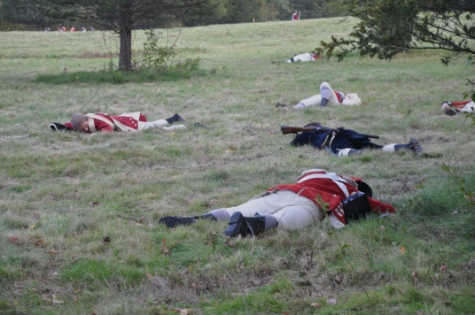
Just like the Colonial armies – they didn’t stand in neat, straight lines as the British did in the Revolutionary War. They broke the rules of battle. Not fair.
Just like younger people bolting from old-school arts organizations – those whose customs and rules work for the producer without working for the video streamer. Not fair.
Predictable, season-oriented, excellently-produced but inadequately result-oriented programming has become today’s version of Artistic Redcoats. Pretty, stubborn, old-fashioned, and easily destroyed by Artistic Neo-Colonials.
Guess who wins that battle?
Chief Instigation Officer: That’s Your Job, Too
A development director once told me that she worked “on behalf of donors.” No, not really. You work on behalf of the mission.
A marketing director once told me that “it’s all about the money.” No, not really. It’s all about the mission.
An artistic director once told me “we do it for the art.” No, not really. We do it to execute the mission.
Unless the mission, well, sucks.
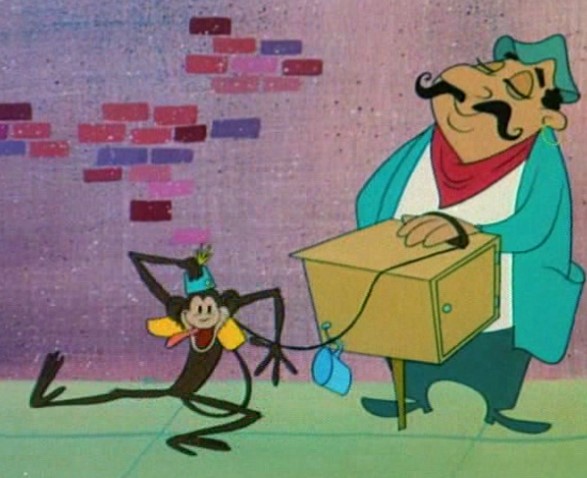
Often it has fallen to me to gently (and sometimes not so gently) advise that without a compelling, singular mission that speaks to a specific, measurable societal improvement, a nonprofit arts organization is merely exchanging entertainment for money — like an organ grinder’s monkey, begging for pennies.
You are there to solve a problem. Make sure your company stands for something outside your little corner of the operation.
The Case for Individual Artist Support Begins with Measuring Hope

Painter sculptor carver glassblower metal-artist potter actor set-designer lighting-designer costume-designer sound-designer playwright director choreographer jazz-dancer ballet-dancer modern-dancer opera-singer jazz-singer classical-singer musical-comedy-singer performance-artist rock-singer rock-musician classical-musician poet novelist ballroom-dancer hip-hop-dancer hip-hop-singer beat-boxer aerialist cinematographer folk-dancer native-dancer folk-singer Latin-dancer swing-dancer belly-dancer tap-dancer clog-dancer sketch-artist screenwriter clown mime country-singer storyteller improviser busker magician juggler composer lyricist ethnically-specific-singer ethnically-specific-dancer ethnically-specific-visual-artist
Apologies to those I neglected.
Art breathes life into our lives. Art offers us the only thing on the planet that has the capacity to make us better – hope. Even existentialism compels us to rebel… and hope nonetheless.
Unfortunately, hope is not a measurable outcome.
We must find it within our best selves to find a system to fund individual artists separate and apart from arts organizations. Not instead of, but in addition to. We deserve to hope for better.
Where’s a good Medici when you need one? Oh, right. They’re still here.

Art for art’s sake? Not so much. Want to be paid? Then there had better be a good story behind it. Or you’re famous. Or you’re dead.
Artistry is everywhere we look… in everything we touch. Look at your desk right now. Find something with no art.
You can’t. Even paper clips have shape, color, and light.
But is a paper clip for its own sake? No. It clips paper. But it is no less artistic.
In 2014, art for art’s sake is aesthetic dogma meant to encourage artists to focus on their own thoughts, as though purity of thought is equivalent to purity of meaning – and, therefore, audiences are irrelevant to art.
Quasi-utopian Codswallop.
Whether commissions are contracted or in the open market, successful art requires patronage in the form of a sponsor, buyer, or audience.
 137 Words