Confusing the Messenger with the Message: Artistic Direction Fulfills the Arts Organization (Not Vice-Versa)
Being a great director has little to do with being a great artistic director.
Directors direct projects. Artistic directors use a collection of projects to fulfill a mission that serves a community. These are completely separate skills.
ADs who direct some projects for their own company risk treating those projects as precious. Too often, they break rules for their project (organizational mission, budget, marketing, etc.) that they would never allow an “outside” director to break.
And in too many cases, when the identity of a nonprofit arts organization is too closely entangled with the vision of an artistic director, the organization’s brand is that much more difficult to recuperate when inevitable leadership change occurs.
After all, succession is not merely an artistic director handpicking a successor, is it? A company is greater than any individual leader, right?
The Psychology of Being Last and 4 Other Ways to Level the Board Meeting Room Table
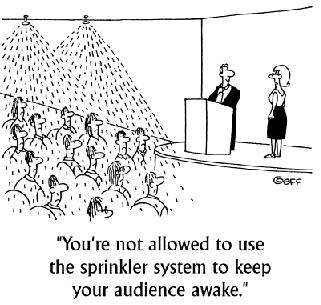 Board meetings are often reporting festivals. Endless polite reports reminiscent of “what I did last summer” essays from the first day of elementary school. It’s too bad.
Calculate the hourly consulting rate of the people in the room (for example, 15 board members x $100/hour = $1,500/hour). At $1,500/hour, do you want to talk about the past or the future?
Board members, inside the meeting room…
- Never do what the last person in the conversation advocates. It’s a trick manipulative people do.
- Consensus is not unanimity; votes needn’t be unanimous. After the decision is made, however, everyone needs to back it.
- No devil’s advocates; take responsibility for your disagreement.
- Read the ED’s report beforehand. EDs: issue your report at least a week before the meeting.
- Your ED is not responsible for writing and executing your strategic plan. You are.
Quantifiable Outcomes and Social Impact Applies to All Nonprofits – Including Arts Organizations
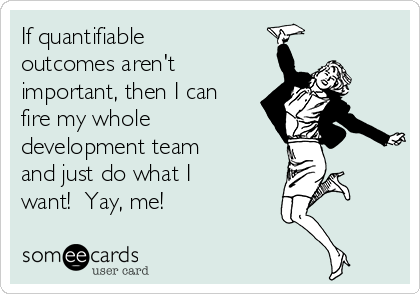
Oh, I can hear it now.
“See?” they’ll say. “People don’t care about outcomes when they make donations. The Washington Post said so. Ergo: we don’t need outcomes.”
To come to that conclusion is just whistling past the graveyard.
Remember these hard facts:
- The arts are not mentioned in section 501 (c) (3) of the US tax code (you know…the law). The arts fall under “charitable organizations,” which require a measure of public good.
- Using the arts as a cover for an individual’s vanity vision is fine, as long as it’s a commercial venture. Once you pull the taxpaying public into it, ethics demand an outcome.
- The arts can be transformative, both on a commercial and nonprofit level. What differentiates the nonprofit is that a measurement of positive change of the human condition is necessary to rationalize funding.
Don’t Be a Company with a Mission; Be a Mission with a Company

I’ve been reading a number of articles discussing arts charity marketing as a whole-company tool, not a ticket-sales tool. Here’s one from TRG.
I was disappointed by Advancement Northwest’s Major Gifts Symposium keynote speakers’ idea of including donors within a charity’s mission.
I have been met with resistance from key artistic and production personnel who have been taught that “we do the art and everything else is a necessary evil.” (Actual quote.)
It’s just human nature for stakeholders to overvalue their contribution. Board members do it. Employees. Volunteers. Audience. Artists. Donors.
Here’s the thing: arts nonprofits that are created to solve a societal problem don’t have these issues. These issues fester when the company is created prior to creating (and rationalizing) a mission.
Create your company as an answer and horses and carts will sort themselves out.
Just Because Someone Repeats It Doesn’t Make It True: Nonprofit Arts Organizations Must Serve a Charitable Purpose or Die Trying

Supposedly, Martin Van Buren wrote to Andrew Jackson imploring Jackson not to approve the railroads for fear of the loss of the canal system, citing mass unemployment, the closing of boating businesses, and the fear of trains moving at breakneck speeds of 15 mph. It never happened. I checked.
In W. P. Kinsella’s Shoeless Joe, “If you build it, they will come” was actually “If you build it, he will come” and referred to the farmer’s father. Not “If you build an arts center, thousands of new patrons will come, regardless of programming.” Read the book.
There is another fabrication that arts organizations are nonprofits simply by being arts organizations. It’s not true. I checked.
All over the US, there are myriad arts nonprofits that don’t serve a charitable purpose. Rightfully, foundations are noticing and diverting funds elsewhere.
Raising money is not Begging, It’s Sharing Joy with Someone Who Might Benefit from Joy in Their Lives

If you’ve ever dined out at a remarkable restaurant with a significant other, you know how to raise money.
You’ve tasted the Cabernet, the risotto, the chocolate soufflé. Inevitably (unless you’re an ass), you’ve offered a taste to your partner. You’ve chosen to have less of the valuable thing you love, but the increased joy of your partner provides impact to an outcome that shows that “spending” that taste was worth the return.
It’s a somewhat simplistic metaphor, but it’s awfully close. Joy in the works of nonprofit arts organizations is not an outcome, but the impact that leads to that joy is. And when you are able to catalyze your impact into a persuasive story – with quantifiable outcomes – then you’re raising money.
But if your partner hates chocolate, there’s nothing you can do. Remember that, too.
Aphorisms for the Modern Arts Charity Leader

If it ain’t broke, break it. Then fix it.
You only read books in one direction.
Your legacy ends when you leave.
Institutional survival is not the goal.
Missions are gods; mission statements are bibles.
The best leaders are the best assistants.
Learn why before you continue.
Success is measured by impact, not excellence.
“Fiscal responsibility” is a business practice, not a mission statement.
Volunteers are employees who work for $0.
If your people are averaging 50+ hours a week, you’re failing.
Always use transitive verbs in your mission statements.
The cool kids are back in high school.
Sharpen your point of view; that’s why it’s a point.
Be completely, spectacularly wrong.
Treat candidates like employees.
Treat employees like human beings.
Treat human beings as though you are one.
Fire yourself regularly; interview yourself for your job.
Be funnier.
Leadership by Forcing Audiences to Follow: “This is How We’ve Always Done It” Didn’t Work in 1776 and It’s Not Working Now

Overall, there are 28% fewer television viewers between 18 and 49 than there were 4 years ago. The average television viewer is now 50.
They’re streaming and DVRing. “Appointment Television” is becoming increasingly obsolete, apart from the Super Bowl…so far.
Broadcasters are sweating bullets and taking golden parachutes. It’s guerrilla consumer behavior and to them, it’s just not fair.
Just like the Colonial armies – they didn’t stand in neat, straight lines as the British did in the Revolutionary War. They broke the rules of battle. Not fair.
Just like younger people bolting from old-school arts organizations – those whose customs and rules work for the producer without working for the video streamer. Not fair.
Predictable, season-oriented, excellently-produced but inadequately result-oriented programming has become today’s version of Artistic Redcoats. Pretty, stubborn, old-fashioned, and easily destroyed by Artistic Neo-Colonials.
Guess who wins that battle?
Omnibus Festa, Omni Tempore: Raising Money to Spend on the People Who are Raising Money to Spend on the People Who are Raising Money to Spend on the People Who are Raising Money…, etc.
 “You scrimp and save and beg and borrow and where does half the money go? Down the throats of the organizing committee.” — Athene Seyler, “Make Mine Mink”
The 1980s and 1990s were the golden years of galas for arts charities. Mostly because there were fewer of them. But also because high percentages of the money actually went to the organization.
Today, putting on massive galas to feed donors – netting scant revenue to the charity but plenty of “goodwill,” “friend-raising” and resume padding – are often construed as elitist, inefficient modes of raising income.
One annual gala, or perhaps groups of organizations sharing a larger gala and splitting the receipts, might thin out the calendar and make them more financially effective. Hundreds of hours of employee and trustee resources might well be better spent on relationship-building, not napkin swans..
Chief Instigation Officer: That’s Your Job, Too

A development director once told me that she worked “on behalf of donors.” No, not really. You work on behalf of the mission.
A marketing director once told me that “it’s all about the money.” No, not really. It’s all about the mission.
An artistic director once told me “we do it for the art.” No, not really. We do it to execute the mission.
Unless the mission, well, sucks.
Often it has fallen to me to gently (and sometimes not so gently) advise that without a compelling, singular mission that speaks to a specific, measurable societal improvement, a nonprofit arts organization is merely exchanging entertainment for money — like an organ grinder’s monkey, begging for pennies.
You are there to solve a problem. Make sure your company stands for something outside your little corner of the operation.
Cultural Fit: FIFA, North Korea, the Kardashians, the Nixon White House…and Your Nonprofit Arts Organization?

I just read an op-ed piece in The New York Times about the over-utilization of “cultural fit” as a criterion for hiring. “One recent survey found that more than 80 percent of employers worldwide named cultural fit as a top hiring priority.”
To an extent, cultural fit is interesting, but a “top hiring priority?” In the broadest sense, someone with an affinity for and experience in the nonprofit arts industry would seem to possess it for a nonprofit arts organization, as opposed to someone from Walmart.
But when challenges face the organization, or if an organization is seeking to “be taken to the next level,” cultural fit is the last thing you want in a key hire. Adding wax to a candle just makes a bigger candle. It doesn’t light up the night until you add the fire.
“That Happened to Me!” – Can nonprofit arts organizations figure out a way to quantify personal meaning?

I wrote a strange and pretty bad play.
One scene took place at the World Trade Center in the wee hours of September 11, 2001. A financial analyst for Cantor Fitzgerald berates a brown-skinned file clerk. The scene was meant to be darkly humorous and uncomfortable.
After one public reading, a woman screamed about that scene.
Tearfully, she raged, “That happened to me! The World Trade Center happened to me!”
I asked, “Oh, were you in New York?”
“No. Baltimore.”
While social impact nonprofits exhibit myriad ways to show purpose beyond basic human needs, arts organizations struggle to show any measurable societal value. However, if we can quantify personal meaning with specific results and stories of value, then we can become successful charitable organizations.
For in every “That happened to me,” the impact is genuinely meaningful.
 137 Words