Like licking honey off a thorn – Art, why we do it, who it’s for, and why it has power

Painters sing.
Actors play.
Writers choreograph.
Singers paint.
Dancers conduct.
Choreographers sculpt.
Sculptors act.
Musicians paint.
Directors sing.
Conductors write.
And in doing so, no issue, thought, or attitude can be unseen, unfelt, or unheard. It is not for the singing, the painting, etc., that art is produced. The glory of art is in its scope of power. To inspire peace or revolution. To cause great comfort or great discomfort. To provide joy or desolation.
As a populist, I believe that visual and performing arts serve great groups of people. I fear that many in power judge art as dangerous. Their battle plan continues to manipulate those same great groups of people into despising it, to consider it as foreign. As the other.
And I fear that they’ve won that battle. But not the war. Not yet.
Legacy-building is not derived from a legacy building

The intention of legacy is a killer.
Many nonprofits in the arts have chosen to engage in massive fundraising efforts to build buildings. But buildings in and of themselves are not your duty.
A capital campaign is like raising money for launch pads. NASA’s mission is to “pioneer the future in space exploration, scientific discovery and aeronautics research.” Not “build the best launch pad.”
Your nonprofit’s mission may tangentially benefit from capital expenditures. But when EDs, ADs, or philanthropists intentionally attempt to leave a legacy by building venues, they put the organization at risk of irrelevance. Some call that the “Edifice Complex.”
The building may last, but the company may die from spent energy, mission drift, and rationalizing programming for the new space.
Your legacy with a nonprofit organization ends when you leave. As it should be.
Flagship or Dreadnought: Regional Theaters in America

With the recent blog by Annah Feinberg currently making the circuit, it seems a good time to chronicle the regional theater “movement.”
1910-1930s: The “Little Theatre Movement.” Few paid artists, but it reflected a community need. Killed by the Depression/WWII.
1947: Dallas – Margo Jones founded Theatre ’47.
1950: Washington, D.C. – Zelda Fichandler founded Arena Stage.
1959: Tyrone Guthrie placed an ad in The New York Times. Asked if any communities wanted to sponsor a resident theatre. 1963 – Guthrie Theatre opens in Minneapolis.
But this did not become a “movement” until the late ’60s when some plays moved from regionals to Broadway, turning many regional theater companies into minor-league baseball clubs.
People outside New York want to experience great plays relevant to their lives.
Unwieldy regionals often gauge success in the form of plays transferring to Broadway.
Irony or disconnect?
“That Happened to Me!” – Can nonprofit arts organizations figure out a way to quantify personal meaning?

I wrote a strange and pretty bad play.
One scene took place at the World Trade Center in the wee hours of September 11, 2001. A financial analyst for Cantor Fitzgerald berates a brown-skinned file clerk. The scene was meant to be darkly humorous and uncomfortable.
After one public reading, a woman screamed about that scene.
Tearfully, she raged, “That happened to me! The World Trade Center happened to me!”
I asked, “Oh, were you in New York?”
“No. Baltimore.”
While social impact nonprofits exhibit myriad ways to show purpose beyond basic human needs, arts organizations struggle to show any measurable societal value. However, if we can quantify personal meaning with specific results and stories of value, then we can become successful charitable organizations.
For in every “That happened to me,” the impact is genuinely meaningful.
Positive Signs in the Nonprofit Arts Community
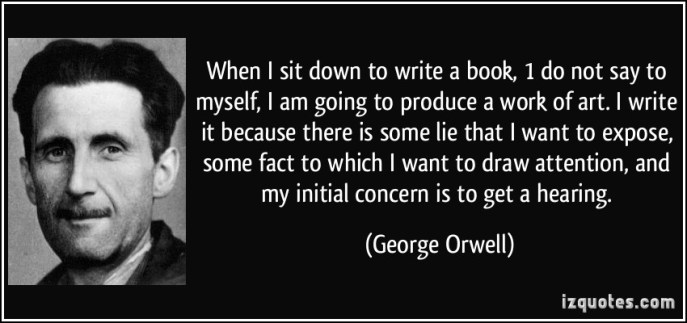
Some nonprofit arts organizations are making new, better choices – and it’s working.
One theater company, eschewing the managing director template (part operations director, part fundraiser, part CPA), has chosen to split the duties. They’ve brought on a strategy director to handle outside duties (fundraising, speaking, lobbying) and strategic plan piloting. The operations and financial duties lie with the general manager.
One children’s arts company, eschewing the arts-revenue template (part production house, part arts education academy), produces in the same facility as several social service agencies. They incorporate the other nonprofits into everything they do, produce a specific style of performance art that speaks to the values of their ethnically, linguistically diverse neighborhood, and gauge success by how well all the nonprofits are bettering the lives of their constituents.
New prototypes. New measurements. New realizations. Excellent work.
April 10, 1957. St. Louis, Mo.

“The clock of destiny is ticking out…. We are not fighting for ourselves alone, we are fighting for this nation…. I just wish this evening that somebody would take a fast plane over to Washington… and say …that the civil rights issue is not some ephemeral, evanescent domestic issue that can be kicked around by reactionary and hypocritical politicians. But it is an eternal moral issue which may well determine the destiny of our nation.… The destiny of our nation is involved. We can’t afford to slow up. The motor is now cranked up. We are moving up the highway of freedom toward the city of equality, and we can’t afford to slow up because our nation has a date with destiny. We’ve got to keep moving. We’ve got to keep moving.”
— Dr. Martin Luther King, Jr.
2014. A year of art awaits you. Predictions for the year to come…

A company you’ve never heard of will produce something special.
A famous company everyone knows will close down.
A play will shake your long-held beliefs.
A concert will move you to tears.
You’ll stop short and get lost in a painting.
You’ll attend an amazing performance that can’t be pigeonholed as theatre, dance, comedy, or music.
Another new study will come out proving that kids with in-school arts education will enjoy great test scores, not join gangs, and will have a tendency to be drug-free. Their community participation will be more extensive, and they’ll be likelier to enter college.
Despite that, in-school arts education will disappear.
Great arts nonprofits will find universally-accepted ways to quantify impact and will receive all the funding they require.
I wish you love, luck, and success in 2014. Oh yes, and art.
Just putting it out there…

I’ve been working with nonprofit arts organizations (mostly theaters) for most of the last twenty-six years. Executive/Managing Director for ten. Marketing and Development Director, too. Consultant for nineteen, the last two full-time.
Raised several million dollars (not by myself, of course!). Increased attendance by hundreds of thousands, mostly by engaging young people.
I’m now looking to regroup. Enhance one brilliant mission. Make life better.
I’m currently based in Seattle, so the I-5 corridor from greater Portland-BC would be optimal. Additionally, I’m very interested in relocating – but to the right place: Chicago, San Diego, Eastern Michigan, NY/NJ/PA, or DC would be fantastic (personal networks in those regions).
I don’t come cheap. But I’ve proven that I’m worth it.
All I need is a company looking for greatness; more than the sum of its programming.
Interested? Click here.

