Like licking honey off a thorn – Art, why we do it, who it’s for, and why it has power

Painters sing.
Actors play.
Writers choreograph.
Singers paint.
Dancers conduct.
Choreographers sculpt.
Sculptors act.
Musicians paint.
Directors sing.
Conductors write.
And in doing so, no issue, thought, or attitude can be unseen, unfelt, or unheard. It is not for the singing, the painting, etc., that art is produced. The glory of art is in its scope of power. To inspire peace or revolution. To cause great comfort or great discomfort. To provide joy or desolation.
As a populist, I believe that visual and performing arts serve great groups of people. I fear that many in power judge art as dangerous. Their battle plan continues to manipulate those same great groups of people into despising it, to consider it as foreign. As the other.
And I fear that they’ve won that battle. But not the war. Not yet.
More words and phrases that ought to be outlawed from the lexicon

“If you build it, they will come.” – Originally written by WP Kinsella in his best-selling novel, Shoeless Joe, and popularized in FIELD OF DREAMS, these six words have rationalized arts capital campaigns across the US, many of the fruits of which have predictably become money pits.
(The original quote was “If you build it, he will come,” and referred to the protagonist’s father. They had a catch.)
“Art for art’s sake” – coined in the 19th century to justify Aestheticism, in which art was thought to exist for the sake of its beauty alone, and that it need serve no other purpose. Today used to justify programming for many arts organizations.
“Community” – here’s the OED definition. Used by nonprofits in a mercurial manner to keep from describing the very people they wish to positively affect.
“I Wanna!” The Fatal Game of Power About Nonprofit Arts. Ages infantile and up.
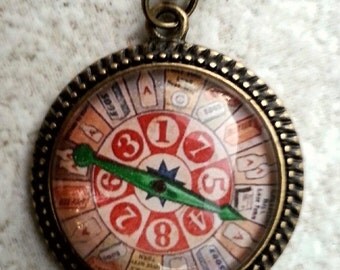
How to play:
Players select their tokens to start play. Each token designates their role in nonprofit art.
Marionette: Performing Artists/Designers
Blob of Clay: Writers/Composers/Visual Artists
Pawn: All technical/administrative/volunteer personnel (one token represents all)
Change Purse: Audience
Louis Vuitton Pocketbook: Donor/Funder
Fake Louis Vuitton Pocketbook: Development Director
Hammer: Trustee
Bent nail: Managing/Executive Director
Telescope looking up: Artistic Director/Curator
Microscope looking down: General Manager/CFO
Bloody leech: Critic/Journalist
Sorry: designated tokens for marketing/pr directors were deleted in the last budget cycle.
All players spin the Great Glass Wheel Of Art simultaneously in all directions and yell, “I Wanna!” The Wheel comes off its bearings; breaks into millions of pieces. Players move tokens anyplace in the room that feels most advantageous, regardless of the playing board or other players.
End of game:
Chaos. All players proclaim victory. None actually win.
Nag, nag, nag. So, Mr. Big Shot, how do you make a perfect nonprofit arts organization?

There is no perfect nonprofit organization of any kind. All nonprofits are experiments in righting some crucial societal wrong.
For the arts, that wrong is ignorance. It is complacence. It is the invisibility of the big picture. The visual and performing arts bring us beauty, power, and intellect. The opposite of all those words, of course, is nothingness.
Art is never for art’s sake because it is condescending to anthropomorphize it.
When great nonprofit arts organizations look at their core ambitions and value, they view their work as an innovative tool toward the betterment of society.
Commercial arts organizations’ goals begin and end with profits. Mediocre arts nonprofits goals are measured by their art. Great arts organizations’ goals involve righting the crucial societal wrong.
Final note: Great nonprofits don’t consider self-survival a worthy mission. Mediocre ones do.
Legacy-building is not derived from a legacy building

The intention of legacy is a killer.
Many nonprofits in the arts have chosen to engage in massive fundraising efforts to build buildings. But buildings in and of themselves are not your duty.
A capital campaign is like raising money for launch pads. NASA’s mission is to “pioneer the future in space exploration, scientific discovery and aeronautics research.” Not “build the best launch pad.”
Your nonprofit’s mission may tangentially benefit from capital expenditures. But when EDs, ADs, or philanthropists intentionally attempt to leave a legacy by building venues, they put the organization at risk of irrelevance. Some call that the “Edifice Complex.”
The building may last, but the company may die from spent energy, mission drift, and rationalizing programming for the new space.
Your legacy with a nonprofit organization ends when you leave. As it should be.
You’re faking it. You know you are. So why would you hire someone who knows less than you do?

Deep in your soul, you understand that you have no idea what you’re doing. You’ve been faking it for years.
You have years of experience and an important-sounding title. But you know the truth.
Now that it’s time to hire someone to report to you, who do you want?
“Someone young I can mold,” said an ED acquaintance recently. What he meant was, “Someone who won’t outshine me in front of my board.” Idiot.
“Someone who has fought the fight,” said a board member I know. “Someone who can offer great perspective and can innovate intelligently.” Wise.
We are imperfect. We have weaknesses. So when you accept that you don’t know everything, the best thing you can do is hire to those weaknesses.
When you do, you’ll be a leader. Until then, you really are a fake.
Nonprofit Arts Organizations – Are you aware that the other parts of the sector believe that you’re stealing money?

In most nonprofits, a donor gives and someone else benefits. Food banks solve hunger, which promotes family stability, which stimulates re-entry into society for the impoverished. Environmental nonprofits encourage clean air and water, which promotes health, which supports longer, happier lives for everyone. Many religious organizations sponsor high morals (“Do unto others…”), which provides a sense of community, which fosters a safety net.
In the arts, the donor and the recipient are often the same person. The donor gives to a company, the company produces a performance or exhibit, and the donor/recipient enjoys the event. The arts are seen by many as elitist and unworthy of support.
We in the arts have to recognize that there is an enmity-laden relationship between arts nonprofits and all the other charities.
And then we have to do something about it.
Nonprofit hiring… Consensus…check. Fairness…check. Zombie interviewers…GRAXAGHZ.

Employees are your biggest asset as an organization. Nonprofit employees hold greater importance. Relationship-building through positive, passionate human interaction are better portents to success than technological advances.
And yet, too often the hiring process – especially in communities seeking “consensus” or “fairness” – has devolved into “Interviews in Zombieland.”
“Consensus” is not unanimity. “Fairness” is irrelevant when you’re seeking great people.
The group interview is quickly disintegrating. Every person takes turns reading pre-designed, pre-printed questions in the dullest drones imaginable. Your staff turns into a cast of Zombies in a badly-written, badly-acted play, and everyone uses the same dull inflection to every candidate.
And then, invariably, zombie staff members complain about the candidates’ dullness.
Nonprofit leaders: is your hiring process as undead as your results? And are zombie interviews the best way to show off your organization?
The black ten goes on the red Jack, Jack

The worst thing you can say is “I’m too busy.”
There are reasons, remedies, and repercussions available here and here and here.
Therefore:
If someone you know calls, call them back. Don’t write. Call. Today.
If someone you know writes, write them back. Or call. Today.
If you have an appointment with someone, do not text them a “crazy busy” excuse in the hopes they’ll go away. Meet. You said you would. Passive aggressiveness is still aggression…and it’s repugnant.
Be fifteen minutes early. Honoring time is the ultimate respect.
Stop being afraid that people will catch you playing Solitaire. We know you’re playing Solitaire. Everyone’s playing Solitaire of a kind. We’re not actually speaking with other people, seeking ideas and help, or evolving curiosity.
If we only express things we already know, then how do we grow?
Neither artists nor nonprofit arts organizations are entitled, they just act that way sometimes
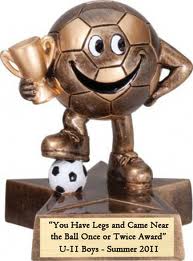
Every kid wins trophies.
There are two possible takeaways from this fact:
a) Trophies don’t mean much; or
b) Every kid deserves trophies.
Or both.
If a), then the result is that external recognition must be useless. Which means:
1) We reward mediocrity.
2) We foster cynicism to greatness.
If b), then the result is that external recognition must be unrelenting. Which means:
3) We reward everything.
4) We foster entitlement to greatness.
I have rarely seen folks as entitled as those in the performing arts today, at least here in Seattle, the epicenter of externally-based self-esteem. I’ve known dozens of actors who have insisted that they’re too talented to audition. Dozens more of nonprofit arts organizations feeling too holy to follow a mission.
Consider: Oscar Isaac had to audition for the role of Llewyn Davis. It wasn’t handed to him.
Positive Signs in the Nonprofit Arts Community
Some nonprofit arts organizations are making new, better choices – and it’s working.
One theater company, eschewing the managing director template (part operations director, part fundraiser, part CPA), has chosen to split the duties. They’ve brought on a strategy director to handle outside duties (fundraising, speaking, lobbying) and strategic plan piloting. The operations and financial duties lie with the general manager.
One children’s arts company, eschewing the arts-revenue template (part production house, part arts education academy), produces in the same facility as several social service agencies. They incorporate the other nonprofits into everything they do, produce a specific style of performance art that speaks to the values of their ethnically, linguistically diverse neighborhood, and gauge success by how well all the nonprofits are bettering the lives of their constituents.
New prototypes. New measurements. New realizations. Excellent work.
Moribund companies value success. Great companies value happiness.

At four, it’s about happiness.
At fourteen, it’s all about responsibility.
At twenty-four, it’s all about ambition.
At thirty-four, it’s all about success.
At forty-four, it’s all about ambition.
At fifty-four, it’s all about responsibility.
At sixty-four, it’s all about happiness.
At seventy-four, it’s all about happiness.
At eighty-four, it’s all about happiness.
At ninety-four, it’s all about happiness.
Happiness trumps everything. Leadership is all about recognizing that. We have a better idea what it takes to be happy than what it takes to be successful. Understandably, those who achieve their own personal happiness only in success do not recognize that perfect, long-lasting happiness is found only when providing happiness to others. Never underestimate happiness as a motivator.
When you value happiness, you will lead a great company. Until then, all you are doing is managing one.

