It Takes Guts to Build a Successful Nonprofit Arts Organization

Take a long inward look at why your nonprofit arts organization exists.
No. Longer.
Stop. Read the next sentence. Close your eyes and do what it says. Open.
Say out loud what the mission is – not the mission statement (because someone else wrote that) – but the from-the-gut societal problem your nonprofit organization solves.
Welcome back. Was that hard to do?
Was your interpretation in line with the mission statement?
Or is your organization a nonprofit just for the tax breaks? In other words, do you take donations to produce somebody’s vision of art (maybe even yours) with no change to your community?
Inspiring nonprofits don’t measure success by journalistic acclaim, performance buzz, or paid attendance. That’s what baseball teams and political conventions do.
Be inspiring. Be better. You’ve been given a life-altering societal charge: follow your gut.
Ethics: “You can’t just ask people to behave ethically just like that.” -Sepp Blatter, Friday, May 29, 2015
 One foundation makes a grant for a pet project and then gets other foundations to commit money to that same project. And then decreases its gift by the amount the other foundations contribute.
One nonprofit arts organization that sent its executive on an expenses-paid vacation to Europe, paying for it with tax-deductible donations.
One executive director that increased the YOY marketing budget of the organization by 50% based not on history or data, but on “that’s how much we’re spending, so that’s how much we have to make.”
One board of directors that undertakes an emergency “going-out-of-business” desperation fundraising campaign, but after raising the money, changes nothing about the way it does business. And then does it again.
Hundreds of nonprofits having to deal with trust issues from nervous donors because of unethical behavior from a disgusting few.
In Charities, The Chicken Came First. There. Settled. (But Each Chicken has the Ability to Hatch a Whole Passel of Eggs.)

When communities are in trouble, specific needs arise. Charities embark on social experiments aimed at addressing issues not easily solved when profit is king.
In the arts, we tend to loudly cluck about indirect results. Economic impact. The “Anti-Gang.” Higher math scores…happy by-products, but not arts’ reason for being.
But do regions address their specific needs – or even their happy by-products – when dominated by single museums, ballets, operas, theaters, or symphonies? Doesn’t it really take hen-houses full of them to increase a region’s vibrancy?
To achieve a community’s cultural success, dominating arts charities might consider the counter-intuitive notion of creating their own competition, risking their own vibrancy for the community’s sake. It’s certainly better for the region to incubate dozens of arts charities rather than one, especially when those “chicks” do the same once they’re able.
Art in a Plutocratic Oligarchy: Send Lawyers, Guns, and Money
In the USA, we made up the phrase “freedom of expression.”
Constitutionally, the first amendment states that Congress can’t pass laws that, among other things, designate a national religion or abridge the freedom of speech or the press.
Often, these rights are lumped together and expanded to include artistic expression.
And political contributions.
And porn.
But in an America where we have officially anthropomorphized businesses, can the arts be effective tools for positive change? Or simply a numbing agent against negative change?
Have retribution-fearing foundations and donors unwittingly turned nonprofit arts charities into a series of retribution-fearing crab buckets? With the exception of organizations that seek measurable impact using arts as a means (not an end), have we become participants in social malaise?
If so, send lawyers, guns, and money to get you out of this.
If Educational Attainment is the Most Valuable Predictor of Arts Attendance, Can the Arts Become a Magnet for a More Highly-Educated Populace?

39.4% of Americans have at least a 2-year college degree.
Of the 25 most populous metropolitan areas (not limited to the city limits), only 15 surpass that percentage by more than 1%.
They are (in order of percentage, high-low):
- DC
- Boston
- Oakland-San Francisco
- Minneapolis
- Seattle
- Denver
- New York
- Baltimore
- Pittsburgh
- San Diego
- Portland
- Chicago
- Atlanta
- Philadelphia
- St. Louis
Coincidentally, every one of these cities exceeds the mean in inter-city US migration (moving from one US city to another).
When you eliminate people who have attended school-based arts performances and exhibitions in which they have a significantly personal connection to the art (a child, a neighbor, etc.), fewer than 50% of Americans have paid to experience the arts.
Does that mean that we give up on the arts in other metropolitan areas? Or might the arts serve as an attractor for highly-educated migrants?
“Diversify” Does Not Mean “Assimilate”
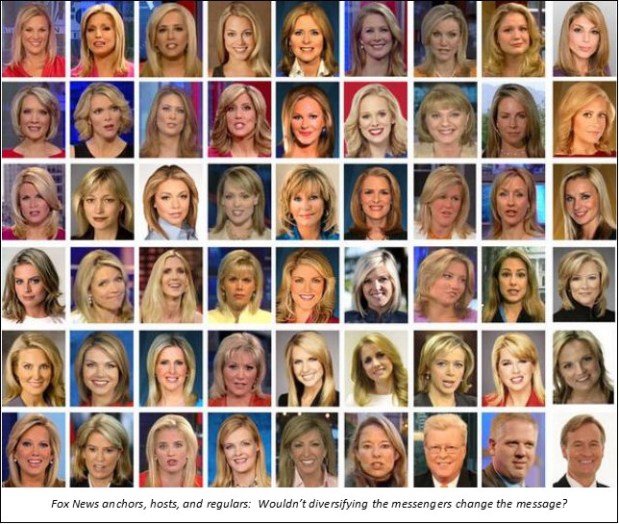
Diversify the audience? Yes. Diversify the experience? Not so much.
Generally speaking, arts audiences are asked to follow privileged Euro-centric (often described as “old” and “white”) behaviors. There are long-standing limitations: no talking, no eating, no drinking, no touching. Sit. Watch. Listen. Clap.
There’s a strict sensibility about enjoyment – so much so, that when a theatre allows its patrons to bring in beverages, arguments ensue as though the end of civilization is nigh.
In any arts endeavor, the key is to invite participation, not ask others to follow your conventions as though they were the default.
The same holds true in the board room. “To change (something) so that it has more different kinds of people or things.” (Webster’s definition of “diversify”) denotes change in the “something,” not changing the people to assimilate to the “something.”
Marketing Arts Charities: In 2014, It’s about Me (Not You… Me)
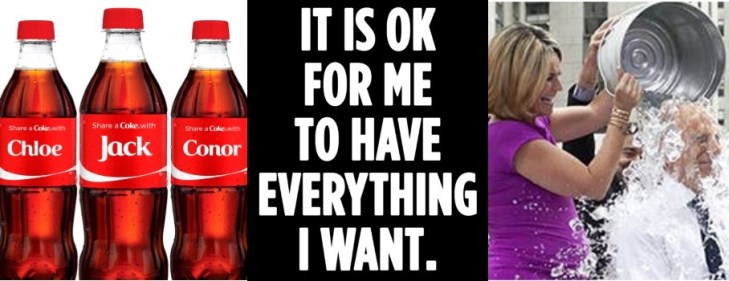
Attracting Millennials to the arts isn’t the easiest thing in the world. What worked with the Greatest Generation hasn’t worked with Boomers or Millennials.
This summer, Coca-Cola put names on the bottles (common first names for those born in the 80s and 90s). Then, a Coke turned into something about “me.”
Look what I’m drinking… it’s me!
We’ve also seen hundreds of bucket challenges to support ALS research, which is great. The product sold in the videos is “me.”
Look what I’m using to do good in the world… it’s me!
Marketing the transformative experience of the arts works best when it’s about “me.”
Look at that amazing artwork/ballet/opera/play/musical… it’s me!
If you can make the experience about the patron (not for the patron), you’ll have a fan for life.
Or at least until the next big thing.
Careers in the Arts: It’s Pretty Ugly Out There
Paul Begala said, “Politics is show business for ugly people.”
The converse, that show business is politics for pretty people, is equally true.
Pretty (young) people enter nonprofit arts leadership believing that they should land a high-paying managing director’s job within 3 years. Ginormous student debt is predicated on that prospect.
Ugly (old) people, therefore, had better vamoose, and decrease the surplus population, to paraphrase C-Dick.
Pretty people panic at red ink. They leave. No experience or belief in failure.
Ugly people see an opportunity. They know when to duck and when to charge.
Consider for your next important hire:
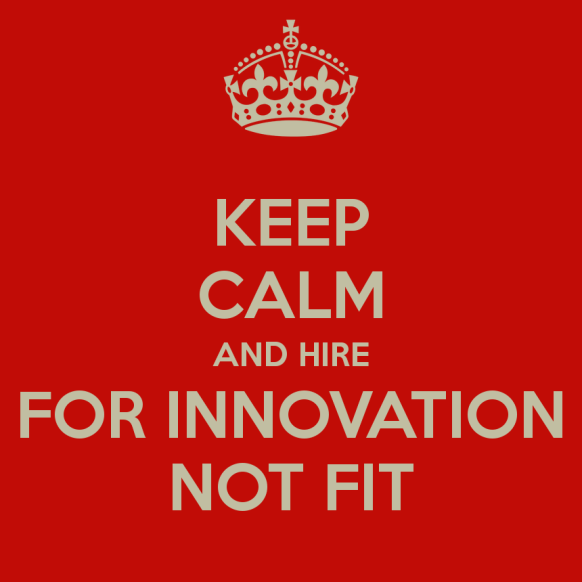
- When hiring for “fit,” by definition, you’re hiring to appease. Don’t expect much change.
- When hiring for “innovation,” you’re hiring to anticipate obstacles. And only someone who has experienced obstacles (and carried on) knows how to do that.
Arts Charity Strategy: When Substitutes and Competitors Blur, Does Your Organization Become Unfocused?

In 1979, Porter’s Five Forces Analysis tool was published by the Harvard Business Review. If you haven’t studied it, do so. But study it hard – it’s far more comprehensive and complex than “5 Tips to Get More Donors” or others in the current mini-list nonsense arena.
When arts charities view competitors (those that do what we do) and substitutes (those that do something that the customer will do instead of what we do) as one force, they lose mission focus, and once that happens, they begin the downward spiral.
To wit: if you run a theatre, your competition is “theatres.” If you make the mistake of thinking that “video games” is a competitor (rather than a substitute), the logical conclusion is that you need to provide “television” instead of “theatre.”
Be a theatre. That’s hard enough these days.
Good and Bad in Charity Funding

Milk, Nicolas Cage’s acting; mugs saving trees or cups saving wash water; bottled water — good or bad?
Good:
Unrestricted funding.
Ice Buckets/Challenges (unless you’re Charity:Water. Then bad.)
Matching gifts.
Nihil Pro Quo.
Public funding.
Multi-year gifts.
Endowments that cover >20% of the organization’s annual budget.
In-kind gifts that are already in the budget.
Thousands of low-level donors.
Dozens of high-level donors.
100% of trustees/board members donate.
100% of trustees/board members donate one of the 3 highest gifts they give all year.
100% of employees want to at least donate $1.
Bad:
Funding restricted to programs unsupported by the mission.
Funding restricted to vanity projects.
Quid pro quo.
Corporations choosing charities via popularity contests/computer click-offs.
Large donations that overly entitle either donor or recipient.
Endowments that cover <20% of the organization’s annual budget.
Panicky, deleterious “Going-Out-Of-Business-Unless-We-Raise-Millions-By-Tuesday” funding schemes.
Labor Day: “I Hear America Singing,” by Walt Whitman, 1867 (153 words. Yeah, I know.)

“I hear America singing, the varied carols I hear,
Those of mechanics, each one singing his as it should be blithe and strong,
The carpenter singing his as he measures his plank or beam,
The mason singing his as he makes ready for work, or leaves off work,
The boatman singing what belongs to him in his boat, the deckhand singing on the steamboat deck,
The shoemaker singing as he sits on his bench, the hatter singing as he stands,
The wood-cutter’s song, the ploughboy’s on his way in the morning, or at noon intermission or at sundown,
The delicious singing of the mother, or of the young wife at work, or of the girl sewing or washing,
Each singing what belongs to him or her and to none else,
The day what belongs to the day—at night the party of young fellows, robust, friendly,
Singing with open mouths their strong melodious songs.”
The Future of the Arts: It’s About the Impact Outside the Building
 I’ve been scouring mission statements. Some inspiring, some boring; some engaging, some self-indulgent. Indications of what the charity values? Absolutely.
Performing arts charities, more than any other, tend to value programming over impact:
“to sustain, encourage, and promote the performing arts and to educate the public with relation thereto” – Lincoln Center
“producing and presenting the greatest examples of music, dance, and theater; supporting artists in the creation of new work; and serving the nation as a leader in arts education” – Kennedy Center
In contrast, public broadcasting tends to value impact over programming:
“to create a more informed public – one challenged and invigorated by a deeper understanding and appreciation of events, ideas and cultures” – NPR
“to inform, to inspire, and to educate” – PBS
Do you see the difference? Do you want the difference?
More on Charities and Families: Find a Way to Answer “NO” to Form 990, Part VI, Line 2

“XYX YXYXYXYX (WHO SERVES AS GENERAL DIRECTOR AND ARTISTIC DIRECTOR, CEO) AND XXX XXXXXXXX (WHO SERVES AS EXECUTIVE DIRECTOR – DEVELOPMENT AND MARKETING) HAVE A FAMILY RELATIONSHIP”
Their two combined salaries (excluding payroll taxes) to total budget: 6.0%.
Their two salaries to all salaries: 12.7%
These two employees to all 406 employees: 0.5%
Ratio, these two employees’ salaries to all employees’ salaries: 25-1
Current year surplus/(deficit): ($3,239,641)
Are your decision-makers married or in some family relationship? For a for-profit company, that’s fine. Family businesses and for-profit nepotism are mostly fine.
But charities, owned by the community and answerable to its constituents, are not family businesses. And when they act irresponsibly, like the above arts organization, it’s a travesty that negatively affects the whole industry.
Because now we have to convince supporters that this won’t happen to their donation.
Arrogance, thy name is YXYXYXYX.
Charity Leadership: Are “Family” and “Company” unconnected? Read on…

Family dynamic: parent(s), children, siblings. Extended to include: grandparents, aunts, uncles, cousins. Further extended to include: spouse(s), in-laws, in-laws’ spouses. May include lifelong friends and, sometimes, pets.
Company dynamic (charity): trustees, leaders, directors, managers, administrators, jobbers, customers, targeted beneficiaries. Extended to include: co-leaders, benefactors, additional management layers, corporate partners, colleagues. Further extended to include: advisors, non-targeted beneficiaries and, sometimes, the government.
Family is not company. Company is not family.
Each seeks a “home.” Neither seeks dysfunction. Few achieve functionality. Both are worthy.
Family members often yearn to be companies with direction: clear and evenhanded parents, rebellious and aspiring children who just need additional experience, collaborative siblings.
Company members often yearn to be families with humanity: caring but autocratic leaders, ambitious managers, iconoclastic jobbers, entitled customers, and grateful beneficiaries.
Is it best to treat families and companies as unconnected?
Your Next Charity Leader: “Cool, Aloof, Efficient” or “Passionate, Assertive, Innovative?”

I suppose it’s not a binary choice. But ultimately, they seem to fall in exclusive constellations of attributes.
Few leaders are in both camps. And, depending on the organization’s life-stage, you may need more from one camp than the other.
Pope Benedict vs. Steve Jobs. Neither is perfect, but each offers different personality sets at the helm of your charity.
I prefer to work with those who are in the latter camp. They are invariably afraid of little, impolitic, guileless, insistent, and noisy. But they most often find solutions, tell the truth, and can make things happen.
Not that I don’t like the former group, but I’ve found they hold their cards tight, condescend, rarely make a definitive statement, defer, passively-aggressively ignore, and require others to make things happen.
But they rarely threaten change. So there’s that.
Negatively Commenting on the Title of a Post (What You’re Reading Now) is Akin to PETA Boycotting “To Kill a Mockingbird” Because, You Know, They’re Killing a Mockingbird.
Recently, a foundation advocate negatively commented on the title of a 137 Words blog post. On the title, not the post.
As Ben Franklin once said, “We are all born ignorant, but one must work hard to remain stupid.”
Thank you for reading 137 Words and sharing it with your colleagues. We’re pretty amazed when 137 Words evokes derision, praise, or questions.
If you haven’t shared yet, please do – karma will be kind.
In 6 months, 137 Words has picked up about 6,000 readers. That exceeds all our expectations. We are truly grateful.
And to those like this advocate who only read the title and not the posting (what you’re reading now), I only wish bliss. Or, should I say, additional bliss.
Harsh? Maybe so. Because I am all too often a card-carrying member of the Right to Extreme Stupidity League.
Charity Missions: Are They Relevant, Or Are They Adorable?
Charitable mission statements tell us what the world looks like as the charity succeeds.
When the mission is rendered moot, the charity is superfluous.
Outside the USA, arts nonprofits are suffering due to reductions in government subsidy. In the USA, however, subsidies are almost non-existent, save for the NEA, which supports with pennies, paper clips, and Cheerios from underneath the Congressional Budget couch cushions.
So the US turns to capitalistic support. Survival of the fittest.
I don’t know. Perhaps the NEA now only exists to exist, like the NRA, PTA, PBS, Catholic Church, or the United Way.
Because in a country where the wealthiest 1% own more than the least-wealthiest 90% and where 95% of monetary gains since 2009 went to the wealthiest 1% of the population, could it be that charities are now just quaint relics of a populist past?
Arts Charity Leaders: The Economic Impact Argument Has Become a Losing Proposition…Move On
From ArtsFund, Seattle:
“Together the activity of nonprofit arts organizations [in our region]…generates close to $2 billion in the Central Puget Sound’s economy creating 32,520 jobs, $882 million in labor income and $83 million in taxes.”
From Viking Stadium (new NFL stadium), Minneapolis:
“Construction will support approximately 13,000 jobs…almost $300 million in wages…upon completion, 3,400 full and part-time jobs…the economic activity from a new stadium will generate over $26 million per year in tax revenue and over $145 million in direct spending by Vikings fans inside the State of Minnesota.”
From McDonald’s:
“McDonald’s provides tax revenue for local, state and national governments…$1.3 billion in United States national and state corporate taxes in 2011…McDonald’s spends hundreds of millions upgrading or building new locations.”
Let’s move on to quantifying our outcomes before we bury ourselves with more “economic impact” studies. It’s just not a winning argument for the arts.
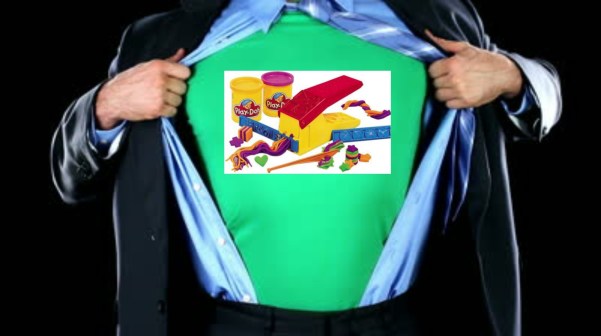
Marketing the Arts, the Play-Doh® Fun Factory, and Marketman©
 “Have a response to ‘If it’s a hit, it’s the art. If it’s a bomb, it’s the marketing.’
It’ll keep you off death row.”
– Marketman©
Artistic events evolve. The elements may be eons old, but the results continue to change. With the squeeze of a contraption, like Play-Doh® in a Fun Factory, necessarily comes a different product. Different from the time before. Different from the next time.
This is a job for Marketman©, a copyrighted portion of this publication. Marketman© (not necessarily male) is your company’s Sea Gal/Jay Carney/Don Draper/Rob Petrie. Marketman© is charged with the task of launching a product to market, eliminating it, subsequently launching a new product.
Marketman© sells art, not tickets. There is no lasting inventory, like month-old sodas on the shelf, when the new product is introduced.
The 7 Most Important Things Not to Do About Not Doing the 52 Most Important Things

I write this blog and read many others. I find that people responding to nifty list posts (6 Strategic Ways to Get the Best Board of Directors) are looking for shorthand answers to longhand questions. I understand the appeal; work is complex and speed is valued over thoughtfulness. But the awkward and obvious question is:
“Are there only 6 ways to get the best board? Or are these just the first 6 you thought of?”
Same goes with negative posts (How NOT to Have a Sucky Board of Directors). I’ve been guilty of this, usually after a recent bad experience. Sorry about that, because the obvious and awkward question is:
“There are a kerjillion ways to have a sucky board. Can’t you help me get a good one?”
I’ll try to be a better poster. And here are 137 ways how…
Kibitzing is the Road to Hell for Charitable Organizations: “You know what you SHOULD do…”

Kibitzing. Webster’s definition: “watching other people and making unwanted comments about what they are doing.”
Good intentions (egad). Some people pay for the privilege via their donation or board service. My mother believes it’s her birthright.
For arts charities, kibitzing mainly involves comments, programs, and activities that are unsupported by research or any evidence of success.
Instead: come with solutions rather than problems. Shortfalls are as unintentional as bad art. No one intends red ink or a lousy play with bad acting. But rather than more bake sales, auctions, galas, or (egad) a “give-a-million-dollars-or-we’ll-go-bankrupt-on-Tuesday” campaign; rather than creating a program committee (because anyone can pick plays) or a marketing committee (because anyone can market the arts), work with your ED toward real, verified solutions.
The road to hell is paved with kibitzers. The road to bankruptcy, too.
Executive Directors: How Do You Control Your Self-Righteous, Burnout-Induced Rage Because, Well, Nobody Knows the Trouble You’ve Seen and Nobody Knows Your Sorrow?

I read an earnest article about burnout and its inevitability for certain nonprofits. According to the article, everyone running a charity should watch for certain signs. Included: “chronic underfunding” (always stressful in any operation), “documentation demands” (spending extra hours issuing reports for funders who do not pay for the extra time/staff necessary to prepare that report), and more.
What to do about it? I’ve tried intense sarcasm, shouting at the top of my lungs, turning crimson, and bellowing the occasional Charlie Brown “AAUGH!” Those seemed like good ideas at the time, but proved to be exactly the opposite. Funny that.
The article recommends that funders provide additional funds for a) reports and for b) executive directors to take sabbaticals.
Wow. Sounds so simple when you put it that way, doesn’t it?
Wait, there’s that sarcasm again. AAUGH.
Charity Culture: If Doing the Right Thing Makes You an Endangered Species, Do It Anyway

Sadly, few people know “Profiles in Courage.” Ask around.
Among performing arts charities, some leaders shrewdly keep their positions because they fear appearing impolitic. They seek sustainability for themselves first, and then, secondarily, their organizations.
To them I implore:
- Pay performers wages, on the books, legal standard or better, for every hour they spend: rehearsals, performances, fittings, etc.
- If your charity isn’t making a substantial difference, merge or close. If it is, share your secrets.
- It’s about social progress, not black ink. Both are preferable, but you’ve failed if your best work is 30 years of balanced budgets.
- Take a stand. Don’t buy trouble, of course, but don’t become invisible to save your own skin.
- Theatres: plays aren’t written, they’re wrought. It’s about the production and the viewpoint, not the script and sets.
- Do something. Don’t be something.
Playing Chicken – For Arts Charities, Not a Game for the Faint of Heart, Because, Well, It’s Impossible and Doesn’t Make a Compelling Case

I read an article recently called A Day Without Art. Stephanie Milling suggests scenarios in which the arts hypothetically disappear for a day. But hypothetical threats are terrible tools of advocacy.
We can’t not have art. Look at your coffee cup, even if it’s paper. It has form, function, and looky there, art on it.
Here’s the ant at this particular picnic:
If art is ubiquitous, does it have value? Why pay for it?
Rather than forecasting the impossible – a day without art – could we better spend our energies measuring our specific organization’s specific outcomes and advocate by trumpeting those to the world?
No one responds well to this particular game of chicken. It’s akin to the idea of eating your kids – it may solve the messy bathroom problem, but it’s neither realistic nor sustainable.
The Creation of Art: Diamonds and Great Art Come from Tension and Pressure

Artists don’t work alone. They require collaborators.
A script isn’t a play. A score isn’t a symphony. A scene isn’t a painting. Choreography isn’t a dance. A libretto and score isn’t an opera.
And a vision isn’t an arts charity.
For any piece of art to be considered finished (and viable), a team is required. Playwrights, composers, choreographers, visual artists, and arts charities may be the ones who create artistic launching pads, but art, like space exploration, requires a slew of equal partners. Among those: directors, performers, designers, interpreters, tools and toolmakers, and audiences. All partners create tension. And that’s good.
No single artist deserves immunity from collaborative pressure. A piece of true art isn’t done until it’s done. Not before. Not after. The immutable pressure of the finish line makes the race exciting, meaningful, and artistic.
 137 Words