40 years in the Desert – Advice for Leaders Taking the Helm and Those Whose Helm is being Taken

Happy Passover. Story goes: Jews escaped slavery and spent 40 years finding “the Promised Land.”
A popular idea on why it took so long: the generation that escaped were slaves. The generation after that was prepared to lead the new world. People found leadership abilities only after shedding the slave mentality.
When a change in staff or board leadership occurs, it is incumbent upon the incumbent organizational leaders to adapt, not the other way around. You didn’t hire (or elect) a “new” former leader. You hired an exemplary individual with different (but complementary) values, aspirations, and ideas. Shed the mentality of an organization run by the previous leader. That culture vanished when that person left.
If you’re the new leader, remember that you were hired to lead on your terms. Your feet won’t fit in someone else’s footprints.
Innovation: not just for production managers and marketing directors

I love production managers. The good ones tend to come from a background of experimentation. Using the improv-tested training mantra of “Yes And,” their work ethic promotes wildly thoughtful experimentation.
I love marketing directors, too. Good ones aim for reaction rather than beauty. No fan cares about “Addy” awards. They care about having a personally meaningful experience.
Innovation in arts charities need not be limited to the production manager or marketing director, the two lead staff members dedicated to translating the art to fans.
To innovate, all you need to do is innovate. Which requires…
Identifying the need…
Honor for the ideas of the team…
Synthesizing the data…
10% more time than is available…
500% more patience…
A vision of success…
And the acceptance that, as more than one production manager has famously said, “This could suck.”
Seen on a sweatshirt while walking around Green Lake: “Change is good. You go first.”

Innovation is annoying. Instigation is even worse. I ought to know. I’ve been accused of both.
But when companies are stagnant (or failing), staying put is not an option.
Innovators and instigators can be difficult. Steve Jobs, Thomas Edison, and Henry Ford are/were not particularly “easy” people. Nor were César Chávez or Copernicus. Nor were many women who broke through glass ceilings.
Too often when things aren’t working, managers paralyze themselves by thinking without forensic analysis. For them, all they believe they need to do is to keep doing what they’re doing.
“We tried change,” they’ll tell you. “It didn’t work. All we have to do is work harder.”
Forensic analysis matters. The great leaders know that and use it to their competitive advantage. They may also consider change agency to be annoying – but also rewarding.
Like licking honey off a thorn – Art, why we do it, who it’s for, and why it has power

Painters sing.
Actors play.
Writers choreograph.
Singers paint.
Dancers conduct.
Choreographers sculpt.
Sculptors act.
Musicians paint.
Directors sing.
Conductors write.
And in doing so, no issue, thought, or attitude can be unseen, unfelt, or unheard. It is not for the singing, the painting, etc., that art is produced. The glory of art is in its scope of power. To inspire peace or revolution. To cause great comfort or great discomfort. To provide joy or desolation.
As a populist, I believe that visual and performing arts serve great groups of people. I fear that many in power judge art as dangerous. Their battle plan continues to manipulate those same great groups of people into despising it, to consider it as foreign. As the other.
And I fear that they’ve won that battle. But not the war. Not yet.
“I Wanna!” The Fatal Game of Power About Nonprofit Arts. Ages infantile and up.
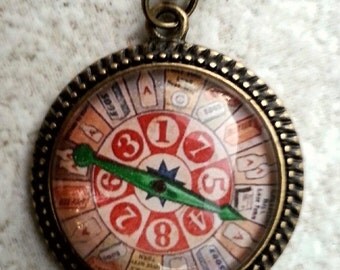
How to play:
Players select their tokens to start play. Each token designates their role in nonprofit art.
Marionette: Performing Artists/Designers
Blob of Clay: Writers/Composers/Visual Artists
Pawn: All technical/administrative/volunteer personnel (one token represents all)
Change Purse: Audience
Louis Vuitton Pocketbook: Donor/Funder
Fake Louis Vuitton Pocketbook: Development Director
Hammer: Trustee
Bent nail: Managing/Executive Director
Telescope looking up: Artistic Director/Curator
Microscope looking down: General Manager/CFO
Bloody leech: Critic/Journalist
Sorry: designated tokens for marketing/pr directors were deleted in the last budget cycle.
All players spin the Great Glass Wheel Of Art simultaneously in all directions and yell, “I Wanna!” The Wheel comes off its bearings; breaks into millions of pieces. Players move tokens anyplace in the room that feels most advantageous, regardless of the playing board or other players.
End of game:
Chaos. All players proclaim victory. None actually win.
Nag, nag, nag. So, Mr. Big Shot, how do you make a perfect nonprofit arts organization?
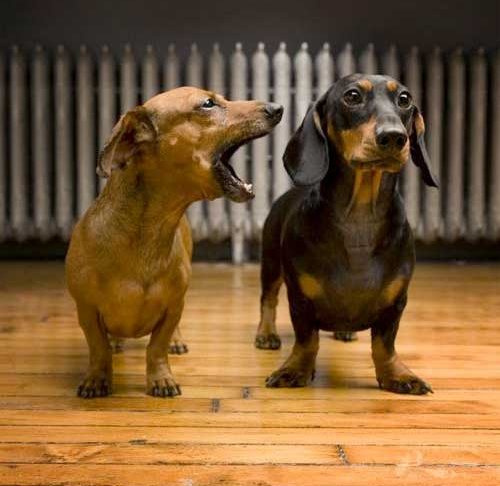
There is no perfect nonprofit organization of any kind. All nonprofits are experiments in righting some crucial societal wrong.
For the arts, that wrong is ignorance. It is complacence. It is the invisibility of the big picture. The visual and performing arts bring us beauty, power, and intellect. The opposite of all those words, of course, is nothingness.
Art is never for art’s sake because it is condescending to anthropomorphize it.
When great nonprofit arts organizations look at their core ambitions and value, they view their work as an innovative tool toward the betterment of society.
Commercial arts organizations’ goals begin and end with profits. Mediocre arts nonprofits goals are measured by their art. Great arts organizations’ goals involve righting the crucial societal wrong.
Final note: Great nonprofits don’t consider self-survival a worthy mission. Mediocre ones do.
You’re faking it. You know you are. So why would you hire someone who knows less than you do?

Deep in your soul, you understand that you have no idea what you’re doing. You’ve been faking it for years.
You have years of experience and an important-sounding title. But you know the truth.
Now that it’s time to hire someone to report to you, who do you want?
“Someone young I can mold,” said an ED acquaintance recently. What he meant was, “Someone who won’t outshine me in front of my board.” Idiot.
“Someone who has fought the fight,” said a board member I know. “Someone who can offer great perspective and can innovate intelligently.” Wise.
We are imperfect. We have weaknesses. So when you accept that you don’t know everything, the best thing you can do is hire to those weaknesses.
When you do, you’ll be a leader. Until then, you really are a fake.
Nonprofit Arts Organizations – Are you aware that the other parts of the sector believe that you’re stealing money?

In most nonprofits, a donor gives and someone else benefits. Food banks solve hunger, which promotes family stability, which stimulates re-entry into society for the impoverished. Environmental nonprofits encourage clean air and water, which promotes health, which supports longer, happier lives for everyone. Many religious organizations sponsor high morals (“Do unto others…”), which provides a sense of community, which fosters a safety net.
In the arts, the donor and the recipient are often the same person. The donor gives to a company, the company produces a performance or exhibit, and the donor/recipient enjoys the event. The arts are seen by many as elitist and unworthy of support.
We in the arts have to recognize that there is an enmity-laden relationship between arts nonprofits and all the other charities.
And then we have to do something about it.
Nonprofit hiring… Consensus…check. Fairness…check. Zombie interviewers…GRAXAGHZ.

Employees are your biggest asset as an organization. Nonprofit employees hold greater importance. Relationship-building through positive, passionate human interaction are better portents to success than technological advances.
And yet, too often the hiring process – especially in communities seeking “consensus” or “fairness” – has devolved into “Interviews in Zombieland.”
“Consensus” is not unanimity. “Fairness” is irrelevant when you’re seeking great people.
The group interview is quickly disintegrating. Every person takes turns reading pre-designed, pre-printed questions in the dullest drones imaginable. Your staff turns into a cast of Zombies in a badly-written, badly-acted play, and everyone uses the same dull inflection to every candidate.
And then, invariably, zombie staff members complain about the candidates’ dullness.
Nonprofit leaders: is your hiring process as undead as your results? And are zombie interviews the best way to show off your organization?
The black ten goes on the red Jack, Jack

The worst thing you can say is “I’m too busy.”
There are reasons, remedies, and repercussions available here and here and here.
Therefore:
If someone you know calls, call them back. Don’t write. Call. Today.
If someone you know writes, write them back. Or call. Today.
If you have an appointment with someone, do not text them a “crazy busy” excuse in the hopes they’ll go away. Meet. You said you would. Passive aggressiveness is still aggression…and it’s repugnant.
Be fifteen minutes early. Honoring time is the ultimate respect.
Stop being afraid that people will catch you playing Solitaire. We know you’re playing Solitaire. Everyone’s playing Solitaire of a kind. We’re not actually speaking with other people, seeking ideas and help, or evolving curiosity.
If we only express things we already know, then how do we grow?
Neither artists nor nonprofit arts organizations are entitled, they just act that way sometimes
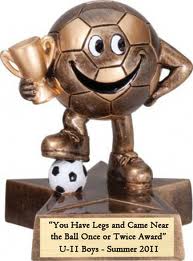
Every kid wins trophies.
There are two possible takeaways from this fact:
a) Trophies don’t mean much; or
b) Every kid deserves trophies.
Or both.
If a), then the result is that external recognition must be useless. Which means:
1) We reward mediocrity.
2) We foster cynicism to greatness.
If b), then the result is that external recognition must be unrelenting. Which means:
3) We reward everything.
4) We foster entitlement to greatness.
I have rarely seen folks as entitled as those in the performing arts today, at least here in Seattle, the epicenter of externally-based self-esteem. I’ve known dozens of actors who have insisted that they’re too talented to audition. Dozens more of nonprofit arts organizations feeling too holy to follow a mission.
Consider: Oscar Isaac had to audition for the role of Llewyn Davis. It wasn’t handed to him.
Cue the heavenly chorus…your nonprofit arts organization will never be hungry again!

Acting is not about performing; nor is painting about artistry; nor is music is about musicianship; nor is dancing about prowess.
Similarly, nonprofit arts organizations cannot be about exhibitions/performances.
The impact of the arts can be quantified. There are myriad studies. But the impact of any individual arts organization is not an equivalent discussion. Each organization must provide specific impact, or better, impact2.
Impact2 is the impact’s impact. As a food bank provides positive impact to a concrete number of families, its impact2 may be the number of households that escaped poverty from having had the gift of food in its worst times.
Many nonprofit arts organizations often define themselves by the quality of production. No surprise, then, that so many struggle to reach new donors. Quantify the impact2 of your nonprofit, and you’ll find your Grail.
No contact necessary! Never have to talk again! But wait…there’s much, much less!

As an ED, I hired many talented people who, surprisingly (given the industry – nonprofit arts organizations), did not care for interaction. One told me, “I communicate best through email. You should email me.” Her desk was thirty feet from mine.
It is the custom among many to jump to the latest innovation, a practice that is not in itself innovative. Operating technology is no less clubby than ordering at Starbucks. If a customer is unaware of the script, the club members become twitchy.
Cyber-innovation, however, offers addictive isolation as an objective. Solely to rely on it to do person-to-person activities for a nonprofit organization – especially one in the arts – is tantamount to reading directions on how to build IKEA furniture and assume that the building process will be complete without physically interaction with the tools and materials.

