The Politics of Charity: Minding Your Speaking Your Mind

Some of us are more candid than we probably ought to be. We put ourselves out there. But remember this as you read this blog and other business columns: things change.
Each charity has a special mission (or at least should) that may relate to other charities in the universe, but not exactly. There is no right or wrong way to do it. And expressing a thought in a column – such as 137 Words – does not equate to either a Sermon on the Mount or a whisper from Jiminy Cricket about that charity. It is merely an expression based on the writer’s own vantage point.
So when Covey, Collins, Porter, or even Harrison proclaim a truth, it’s not backpedaling to say that the “truth” is a reaction to what’s happening right now. And that things change.
The Future of the Arts: It’s About the Impact Outside the Building
 I’ve been scouring mission statements. Some inspiring, some boring; some engaging, some self-indulgent. Indications of what the charity values? Absolutely.
Performing arts charities, more than any other, tend to value programming over impact:
“to sustain, encourage, and promote the performing arts and to educate the public with relation thereto” – Lincoln Center
“producing and presenting the greatest examples of music, dance, and theater; supporting artists in the creation of new work; and serving the nation as a leader in arts education” – Kennedy Center
In contrast, public broadcasting tends to value impact over programming:
“to create a more informed public – one challenged and invigorated by a deeper understanding and appreciation of events, ideas and cultures” – NPR
“to inform, to inspire, and to educate” – PBS
Do you see the difference? Do you want the difference?
The Case for Individual Artist Support Begins with Measuring Hope

Painter sculptor carver glassblower metal-artist potter actor set-designer lighting-designer costume-designer sound-designer playwright director choreographer jazz-dancer ballet-dancer modern-dancer opera-singer jazz-singer classical-singer musical-comedy-singer performance-artist rock-singer rock-musician classical-musician poet novelist ballroom-dancer hip-hop-dancer hip-hop-singer beat-boxer aerialist cinematographer folk-dancer native-dancer folk-singer Latin-dancer swing-dancer belly-dancer tap-dancer clog-dancer sketch-artist screenwriter clown mime country-singer storyteller improviser busker magician juggler composer lyricist ethnically-specific-singer ethnically-specific-dancer ethnically-specific-visual-artist
Apologies to those I neglected.
Art breathes life into our lives. Art offers us the only thing on the planet that has the capacity to make us better – hope. Even existentialism compels us to rebel… and hope nonetheless.
Unfortunately, hope is not a measurable outcome.
We must find it within our best selves to find a system to fund individual artists separate and apart from arts organizations. Not instead of, but in addition to. We deserve to hope for better.
Negatively Commenting on the Title of a Post (What You’re Reading Now) is Akin to PETA Boycotting “To Kill a Mockingbird” Because, You Know, They’re Killing a Mockingbird.
Recently, a foundation advocate negatively commented on the title of a 137 Words blog post. On the title, not the post.
As Ben Franklin once said, “We are all born ignorant, but one must work hard to remain stupid.”
Thank you for reading 137 Words and sharing it with your colleagues. We’re pretty amazed when 137 Words evokes derision, praise, or questions.
If you haven’t shared yet, please do – karma will be kind.
In 6 months, 137 Words has picked up about 6,000 readers. That exceeds all our expectations. We are truly grateful.
And to those like this advocate who only read the title and not the posting (what you’re reading now), I only wish bliss. Or, should I say, additional bliss.
Harsh? Maybe so. Because I am all too often a card-carrying member of the Right to Extreme Stupidity League.
Charity Missions: Are They Relevant, Or Are They Adorable?
Charitable mission statements tell us what the world looks like as the charity succeeds.
When the mission is rendered moot, the charity is superfluous.
Outside the USA, arts nonprofits are suffering due to reductions in government subsidy. In the USA, however, subsidies are almost non-existent, save for the NEA, which supports with pennies, paper clips, and Cheerios from underneath the Congressional Budget couch cushions.
So the US turns to capitalistic support. Survival of the fittest.
I don’t know. Perhaps the NEA now only exists to exist, like the NRA, PTA, PBS, Catholic Church, or the United Way.
Because in a country where the wealthiest 1% own more than the least-wealthiest 90% and where 95% of monetary gains since 2009 went to the wealthiest 1% of the population, could it be that charities are now just quaint relics of a populist past?
Arts Charity Leaders: The Economic Impact Argument Has Become a Losing Proposition…Move On
From ArtsFund, Seattle:
“Together the activity of nonprofit arts organizations [in our region]…generates close to $2 billion in the Central Puget Sound’s economy creating 32,520 jobs, $882 million in labor income and $83 million in taxes.”
From Viking Stadium (new NFL stadium), Minneapolis:
“Construction will support approximately 13,000 jobs…almost $300 million in wages…upon completion, 3,400 full and part-time jobs…the economic activity from a new stadium will generate over $26 million per year in tax revenue and over $145 million in direct spending by Vikings fans inside the State of Minnesota.”
From McDonald’s:
“McDonald’s provides tax revenue for local, state and national governments…$1.3 billion in United States national and state corporate taxes in 2011…McDonald’s spends hundreds of millions upgrading or building new locations.”
Let’s move on to quantifying our outcomes before we bury ourselves with more “economic impact” studies. It’s just not a winning argument for the arts.
The 7 Most Important Things Not to Do About Not Doing the 52 Most Important Things

I write this blog and read many others. I find that people responding to nifty list posts (6 Strategic Ways to Get the Best Board of Directors) are looking for shorthand answers to longhand questions. I understand the appeal; work is complex and speed is valued over thoughtfulness. But the awkward and obvious question is:
“Are there only 6 ways to get the best board? Or are these just the first 6 you thought of?”
Same goes with negative posts (How NOT to Have a Sucky Board of Directors). I’ve been guilty of this, usually after a recent bad experience. Sorry about that, because the obvious and awkward question is:
“There are a kerjillion ways to have a sucky board. Can’t you help me get a good one?”
I’ll try to be a better poster. And here are 137 ways how…
Kibitzing is the Road to Hell for Charitable Organizations: “You know what you SHOULD do…”

Kibitzing. Webster’s definition: “watching other people and making unwanted comments about what they are doing.”
Good intentions (egad). Some people pay for the privilege via their donation or board service. My mother believes it’s her birthright.
For arts charities, kibitzing mainly involves comments, programs, and activities that are unsupported by research or any evidence of success.
Instead: come with solutions rather than problems. Shortfalls are as unintentional as bad art. No one intends red ink or a lousy play with bad acting. But rather than more bake sales, auctions, galas, or (egad) a “give-a-million-dollars-or-we’ll-go-bankrupt-on-Tuesday” campaign; rather than creating a program committee (because anyone can pick plays) or a marketing committee (because anyone can market the arts), work with your ED toward real, verified solutions.
The road to hell is paved with kibitzers. The road to bankruptcy, too.
Executive Directors: How Do You Control Your Self-Righteous, Burnout-Induced Rage Because, Well, Nobody Knows the Trouble You’ve Seen and Nobody Knows Your Sorrow?

I read an earnest article about burnout and its inevitability for certain nonprofits. According to the article, everyone running a charity should watch for certain signs. Included: “chronic underfunding” (always stressful in any operation), “documentation demands” (spending extra hours issuing reports for funders who do not pay for the extra time/staff necessary to prepare that report), and more.
What to do about it? I’ve tried intense sarcasm, shouting at the top of my lungs, turning crimson, and bellowing the occasional Charlie Brown “AAUGH!” Those seemed like good ideas at the time, but proved to be exactly the opposite. Funny that.
The article recommends that funders provide additional funds for a) reports and for b) executive directors to take sabbaticals.
Wow. Sounds so simple when you put it that way, doesn’t it?
Wait, there’s that sarcasm again. AAUGH.
Charity Culture: If Doing the Right Thing Makes You an Endangered Species, Do It Anyway

Sadly, few people know “Profiles in Courage.” Ask around.
Among performing arts charities, some leaders shrewdly keep their positions because they fear appearing impolitic. They seek sustainability for themselves first, and then, secondarily, their organizations.
To them I implore:
- Pay performers wages, on the books, legal standard or better, for every hour they spend: rehearsals, performances, fittings, etc.
- If your charity isn’t making a substantial difference, merge or close. If it is, share your secrets.
- It’s about social progress, not black ink. Both are preferable, but you’ve failed if your best work is 30 years of balanced budgets.
- Take a stand. Don’t buy trouble, of course, but don’t become invisible to save your own skin.
- Theatres: plays aren’t written, they’re wrought. It’s about the production and the viewpoint, not the script and sets.
- Do something. Don’t be something.
The Creation of Art: Diamonds and Great Art Come from Tension and Pressure

Artists don’t work alone. They require collaborators.
A script isn’t a play. A score isn’t a symphony. A scene isn’t a painting. Choreography isn’t a dance. A libretto and score isn’t an opera.
And a vision isn’t an arts charity.
For any piece of art to be considered finished (and viable), a team is required. Playwrights, composers, choreographers, visual artists, and arts charities may be the ones who create artistic launching pads, but art, like space exploration, requires a slew of equal partners. Among those: directors, performers, designers, interpreters, tools and toolmakers, and audiences. All partners create tension. And that’s good.
No single artist deserves immunity from collaborative pressure. A piece of true art isn’t done until it’s done. Not before. Not after. The immutable pressure of the finish line makes the race exciting, meaningful, and artistic.
This Just In: Artists Value Money Just Like You Do

I just read an article in the Chicago Tribune about actors receiving no payment for some performances. I’m not sure why it was written, except as acknowledgment that, well, actors receive no payment for some performances. Even for hit shows.
But why? “We can either pay you guys and not do a show — or not pay you and do a show,” said one producer in the article.
Here’s the thing: there are lots of performers. The competition forces them to undervalue themselves.
But that doesn’t mean that it’s ethical not to pay them. At least minimum wage. For rehearsal and performance time.
If that producer decides not to make money on a project, that’s his prerogative. But no pay to performers is abusive, unless he’s offering 40 acres and a mule after the run of the show.
Nonprofit Strategy: Managing Change is Hard; Managing Stasis is Impossible

I had breakfast with a trustee for an educational organization in a wealthy community within the last five years.
He bemoaned the fact that an über-wealthy benefactor was annually bailing them out with huge sums of money, but the organization was still always crying for cash. And the company refused to upgrade its business practices.
“Why is she bailing them out?” I paraphrased.
“Because it’s her legacy to her kid,” he paraphrased. “And let’s face it, for vanity.”
“And if it folds?”
“She won’t let it.”
“Are they always in a cash crisis?”
“Yes – and not only that, it’s just not serving all that many children.”
“And they can’t change the way they do business?”
“She won’t let them.”
Can’t change. Can’t succeed. Can’t close.
Bad for the organization? Bad for the industry? Bad for the community?
For Arts Charities, Everything Powerful Stems from a Great Mission…Including a Great Mission Statement
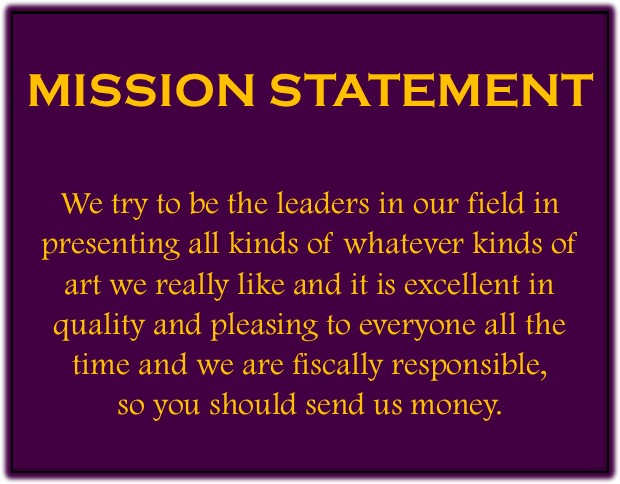
Many arts organizations craft mission statements that promote activities, art, and excellence. Unfortunately, those things are irrelevant.
“[Theater] presents engaging dramatic work that celebrates the intimate relationship among artist, audience and language.”
That’s not a mission statement. No surprise: that theater died.
A mission is the unspeakable acme of a societal obligation. A mission statement expresses that mission, the product of an organizational manifesto, as best it can.
“[Company’s] mission is to create theatre so strikingly original in form, content or both, that it instills in young people an enduring awe, love and respect for the medium, thus preserving imagination and wonder, those hallmarks of childhood which are the keys to the future.”
See the difference? This mission statement discusses the mission’s impact – “preserving imagination and wonder” – as a crucial need. That’s a supportable argument.
Hiring 103: Do Unto Others, for Pete’s Sake!

Oh, those shoddy, “industry standard” hiring practices. They’re still here.
To follow up on this, this, this, this and this,
1) Communicate quickly, at least twice.
- We got your resume.
- Thanks for your interest, but you are not being considered (within a week of close).
2) When you’ve interviewed someone, call them (no email) within a week.
- Thanks for your interest, but you are no longer being considered.
- We’re still interviewing people. I’ll call you on [date range].
3) When you’ve interviewed someone more than once and have hired someone else, call them (no email) immediately.
- Thanks for your interest, but we’ve chosen someone else.
4) Never…
- …send communications stating who you’ve hired (salt, meet wound)
- …let them know they were in the final cut (see above)
- …say you’ll be in touch and then disappear.
- …be rude.
- …assume job-seekers are psychics.
Dream Job…and My Title Would Be Chief Dream Merchant

What I want:
An arts charity that makes my community better.
Value to the community:
Safety. Knowledge. Personal Power. Issue solutions.
Artistic Tools:
Provocation. Entertainment. Populism. Progressiveness. Mischief.
Other Tools:
Educational residencies in both art and topic.
Partners:
Every other charity, educational institution, or NGO with similar values.
Differentiation:
50-50 split on revenues with partners. Partners open their mailing lists to help themselves financially through ticket sales.
Quantifiable outcomes:
The measured outcomes of the partners. Quantity of classes, students, and schools participating.
Non-quantifiable outcomes:
Populist results defeat the arts’ elitist reputation. The needs of the charities are filled.
Initial budget:
Enough so that all artists receive at least $15/hour (in 2014 dollars) and no full-time hourly rate is more than 4x anyone else’s.
Impact:
Arts moves people to action. Thorny issues seen can never be unseen. Life is better.
Nonprofit Management Counter-Intuition: Every Now and Then, You Have to Fire Yourself
 Every now and then, fire yourself. Then interview yourself for your job. Would you get it? What attributes would best suit you for it? (Do you even want it?)
Don’t schedule a meeting for one entire week each quarter. Stop being “too busy.” Find your value as a resource (rather than as a boss).
Take down all the cubicle and office doors. Then, every morning, say hello to each human you see before you walk into your door-free office.
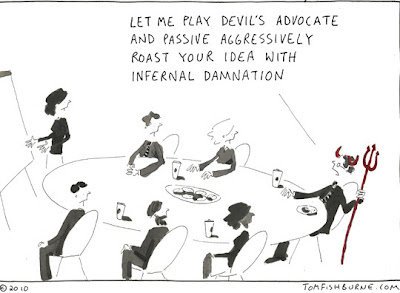
Eliminate devil’s advocacy (unless you’re the Pope). Disagreement without responsibility hinders your organization’s progress.
Teach your staff your job. Let them do it when you’re on vacation.
Take all your vacation days. No contact. Don’t ruin it by doubling your workload upon returning.
Make sure your full-time salary is less than 6x the full-time salary of anyone else.
A Version Aversion (or: Why It’s More Important That The Whole Thing Works And Not Just The Elements)

Saw a play recently. The story was appropriately troubling and deftly told. But great art is not about literary proficiency or good acting.
Often in any of the artistic ventures, we render our version of a piece, and are judged by some version of accolade. Our study becomes about acting excellence or mind-blowing special effect or the brilliant manipulation of color and light. And critics judge on those foundations. Even in a new work, we cling to “our version.”
Fans don’t care. Fans are, fittingly, binary. Either the art makes one transform or it doesn’t. When we seek outcomes that make it jarring to return to reality, we do well. If fans only enjoy the elements created to produce the art’s reality, then “our version of art” is to “great art” as “Matchbox Cars” are to “Lamborghinis.”
Stepping in Moral Quicksand: When a Horrible Person/Company Gives to Your Nonprofit

I was going to write about all the charities to which Donald Sterling donated.
I was going to ask if the standards of the organization should stand up against the horror of the donor.
After all, UCLA gave back $3 million of Sterling’s money.
Then I was going to ask about donations from companies that peddle “evil” – tobacco, liquor, oil, etc.
But then I thought about individual donors’ morals. Not just unethical oligarchs like Henry Ford, Rupert Murdoch, John D. MacArthur, or even Sterling. What about all the philanthropists whose fortunes were built on a million broken backs? Or a few? Or one? And I thought about my experiences with morally corrupt donors.
I’m sinking.
Help.
You Gotta Live in the House You Live in

Hypothetical: Strategically speaking, what would your charity do if money were not an issue at all?
The answer to this question is significant. Because if it begins with anything but “we’d do exactly what we’re doing now,” then it’s likely that either you or your mission have to go.
I live in a 1950s house. Typical low ceilings. Small, utilitarian rooms. If I had all the money in the world to renovate it, I’d enhance its 1950s nature, not build 4 additional stories to get a Puget Sound view and in doing so, ruin the house’s charm.
Same with charities, arts or otherwise. You created a mission for a reason…there was a need. A societal wrong to be righted. If you want to accomplish something other than your organization’s mission, go do it.
Just do it somewhere else.
Jack and Jill: Why Smart Nonprofits Search for Interim Leadership
Executive Director Jack resigns.
Jack leads the committee to replace himself. The committee selects Jill.
Jill is not Jack.
Jill discovers too late that she been enlisted to follow Jack’s path rather than set her own.
After a year, not only is Jill unhappy, but trustees and employees resign.
After a second year, Jill resigns. Or is fired.
The reeling company hires Fred – who is neither Jack nor Jill.
Uneasy lies the head that breaks a crown.
Succession planning needn’t require permanence. It might be best to hire an interim leader from outside the organization (not a board member) while the permanent search is carefully executed.
Every organizational leader’s legacy ends the day the leader leaves. Which means it is never a good idea to have the outgoing director have a say on a permanent successor.
Seen on a sweatshirt while walking around Green Lake: “Change is good. You go first.”

Innovation is annoying. Instigation is even worse. I ought to know. I’ve been accused of both.
But when companies are stagnant (or failing), staying put is not an option.
Innovators and instigators can be difficult. Steve Jobs, Thomas Edison, and Henry Ford are/were not particularly “easy” people. Nor were César Chávez or Copernicus. Nor were many women who broke through glass ceilings.
Too often when things aren’t working, managers paralyze themselves by thinking without forensic analysis. For them, all they believe they need to do is to keep doing what they’re doing.
“We tried change,” they’ll tell you. “It didn’t work. All we have to do is work harder.”
Forensic analysis matters. The great leaders know that and use it to their competitive advantage. They may also consider change agency to be annoying – but also rewarding.
Like licking honey off a thorn – Art, why we do it, who it’s for, and why it has power

Painters sing.
Actors play.
Writers choreograph.
Singers paint.
Dancers conduct.
Choreographers sculpt.
Sculptors act.
Musicians paint.
Directors sing.
Conductors write.
And in doing so, no issue, thought, or attitude can be unseen, unfelt, or unheard. It is not for the singing, the painting, etc., that art is produced. The glory of art is in its scope of power. To inspire peace or revolution. To cause great comfort or great discomfort. To provide joy or desolation.
As a populist, I believe that visual and performing arts serve great groups of people. I fear that many in power judge art as dangerous. Their battle plan continues to manipulate those same great groups of people into despising it, to consider it as foreign. As the other.
And I fear that they’ve won that battle. But not the war. Not yet.
More words and phrases that ought to be outlawed from the lexicon

“If you build it, they will come.” – Originally written by WP Kinsella in his best-selling novel, Shoeless Joe, and popularized in FIELD OF DREAMS, these six words have rationalized arts capital campaigns across the US, many of the fruits of which have predictably become money pits.
(The original quote was “If you build it, he will come,” and referred to the protagonist’s father. They had a catch.)
“Art for art’s sake” – coined in the 19th century to justify Aestheticism, in which art was thought to exist for the sake of its beauty alone, and that it need serve no other purpose. Today used to justify programming for many arts organizations.
“Community” – here’s the OED definition. Used by nonprofits in a mercurial manner to keep from describing the very people they wish to positively affect.
“I Wanna!” The Fatal Game of Power About Nonprofit Arts. Ages infantile and up.
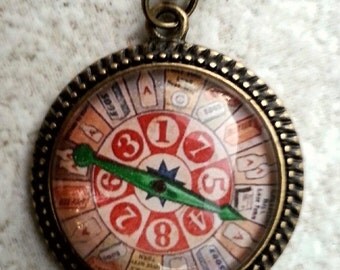
How to play:
Players select their tokens to start play. Each token designates their role in nonprofit art.
Marionette: Performing Artists/Designers
Blob of Clay: Writers/Composers/Visual Artists
Pawn: All technical/administrative/volunteer personnel (one token represents all)
Change Purse: Audience
Louis Vuitton Pocketbook: Donor/Funder
Fake Louis Vuitton Pocketbook: Development Director
Hammer: Trustee
Bent nail: Managing/Executive Director
Telescope looking up: Artistic Director/Curator
Microscope looking down: General Manager/CFO
Bloody leech: Critic/Journalist
Sorry: designated tokens for marketing/pr directors were deleted in the last budget cycle.
All players spin the Great Glass Wheel Of Art simultaneously in all directions and yell, “I Wanna!” The Wheel comes off its bearings; breaks into millions of pieces. Players move tokens anyplace in the room that feels most advantageous, regardless of the playing board or other players.
End of game:
Chaos. All players proclaim victory. None actually win.

